
The Executive Chairman of the Economic and Financial Crimes Commission (EFCC), Mr. Ola Olukoyede, has charged the Chairman of the National Sports Commission (NSC), Shehu Dikko, on the need to observe regulatory compliance in the interest of sports development in the country.
He gave the charge in Abuja on Friday, May 29, as Dikko led the top management team of the NSC on a courtesy visit to him at the EFCC’s corporate headquarters.
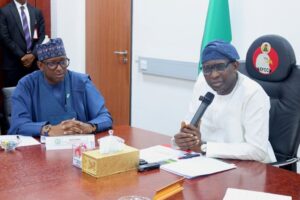
“We always want to engage in the spirit of working together. As you would have known, the EFCC has had cause to investigate some of your predecessors, and some of the case files are still active. I think there is a need for us to work together. If there are things that we need to prevent, we have to prevent them before they lead to issues that would attract investigations,” he said.
According to Olukoyede, actualising this would involve the intervention of the EFCC’s Department of Fraud Risk Assessment and Control (FRAC), dedicated to fraud prevention in Ministries, Departments and Agencies (MDAs), particularly in the financial undertakings of the NSC.
“We now have a department called the Fraud Risk Assessment and Control, FRAC, basically set up for prevention purposes. That department will work with you so that we can establish a fraud risk compliance template for your Commission on areas you need to watch out for, especially in procurement, contract awards, and fund management.”
He regretted that grants, subventions, and monetary awards from international sporting organisations had been mismanaged by previous leaderships of the NSC and cautioned that such financial malpractices should be avoided going forward.
“In the past, some of the funds we earned from international bodies were mismanaged, and we would not want such to repeat itself anymore. Some of the contracts you have signed and Memoranda of Understanding (MoUs) would also be part of it, particularly for your new agency, the National Anti-Doping Agency,” he said.
Speaking further, he declared:
“We will look at those grey areas that land people into violating the financial laws of the country. Prevention is better than cure. People will want to hear that the EFCC is investigating the NSC. I think we should avoid that going forward. So, put it into consideration right from day one, so that we can work out a template for you and probably create a desk that can liaise with you. That way, we will be able to examine your structures, systems, and processes, help you redefine them, and see how we can come up with a risk assessment framework for you to run your operations free of suspicion.”
The EFCC boss, who disclosed that he had been closely following the activities of the Dikko-led management of the NSC, praised him for the positive changes he had introduced and their outcomes.
“I have seen changes. You have been changing the face of sports in Nigeria very drastically. Corporate bodies are now willing to come around to support and sponsor sporting activities in the country. We are monitoring the development.
“So, I welcome this collaboration. There is no doubt that you have taken sports from the realm of just being sports to that of a national asset—something that adds value to our economy. Now, we are seeing sports as something all of us can support. We are ready to work with you and create a desk that will liaise with you. I wish you more success,” he said.
In his remarks, Dikko stated that he was on a mission to seek collaboration with relevant agencies in driving his vision of the Renewed Hope Initiative for Sports.
“I am here because we want to clean the system for the first time. We are piloting an independent integrity board that is working to ensure that everything is done appropriately,” he said.
He regretted that, for many years, the country had been more concerned with merely participating in competitions and often returning home empty-handed “like tourists.”
“We have to be direct and intentional and create frameworks, make decisions, and build collaborations that can drive responsibility toward achieving desired results through sports, while also encouraging the private sector to play a role alongside the government in sports,” he said.
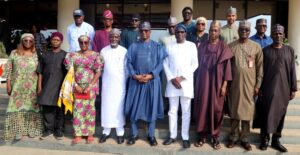
He described sports as a key sector capable of driving not only socio-economic development but also serving as a tool for economic advancement and national unity.
Dele Oyewale
Head, Media & Publicity
May 29, 2026
